Painting has the power to make us walk, play, explore, or even interact with our environment. It is the active design. The goal is to create spaces that encourage physical activity and foster a sense of ownership among users. Far from “No” signs and cold, impersonal signage, paint encourages movement through curiosity, surprise, and visual enjoyment.
Summary
The Superpowers of Painting Throughout History
As far back as ancient times, the first painted signs
Long before the modern era, societies organized movement through visual cues integrated into architecture.
One of the most striking examples can be found in the Palace of Knossos in Crete, built by the Minoan civilization around 1900-1700 BC. This vast complex, sometimes referred to as the "labyrinth" of Minos, already used visual cues to guide visitors. The floors, wall frescoes, and even the arrangement of columns were designed to signal specific areas and create sensory landmarks. Certain frescoes of dolphins, for example, identified spaces related to the sea or relaxation, while recurring geometric patterns marked traffic routes. Art not only decorated the palace, it also played a direct role in its legibility and the management of traffic flows in a huge and complex space.
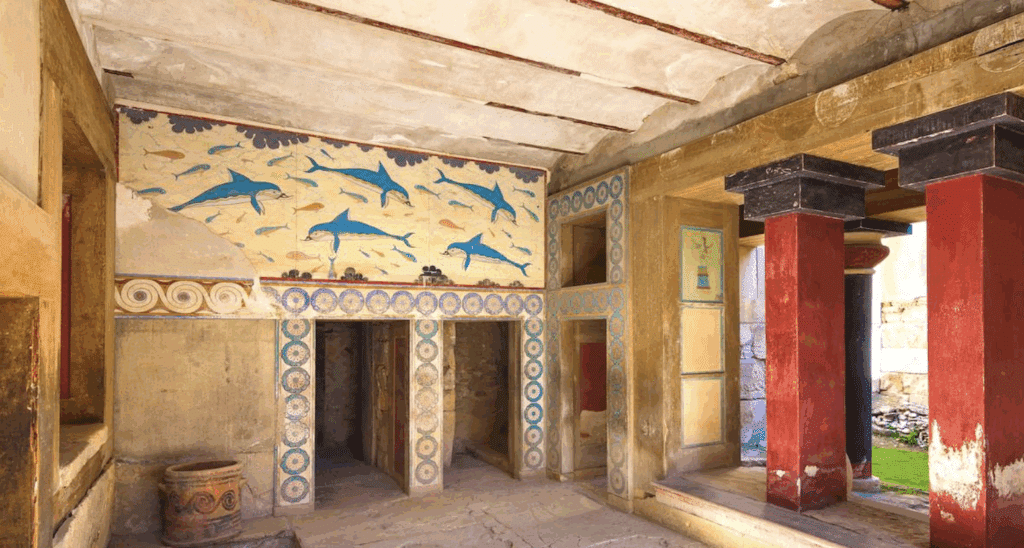
This makes it a direct precursor to the approaches later seen in Rome’s imperial baths, which shared this same idea of blending aesthetics and functionality to shape the experience.
Renaissance Frescoes and Their Impact
During the Renaissance, the layout of gardens and public squares was designed to serve as a visual guide for movement. In the gardens of Versailles, for example, the long, straight paths, the series of interconnected ponds, and the vanishing points leading to statues or pavilions encouraged visitors to walk long distances while offering them a succession of spectacular views.
Murals and Urban Planning in the 19th Century
In the 19th century, modern urban planning continued this approach, adding traffic and safety objectives. Haussmann’s redesign of the sidewalks in Paris was not merely a matter of comfort: it created clear pathways to channel pedestrian traffic. Graphic signage, such as that on the 1933 London Underground map designed by Harry Beck, made complex networks easier to understand, guiding users and optimizing their journeys.
The Emergence of the Concept of the “Nudge” in the 20th Century
In the 20th century, this relationship between image and trajectory was enriched by behavioral science with the emergence of nudges. The term “nudge,” popularized by Richard Thaler and Cass Sunstein in *Nudge: Improving Decisions About Health, Wealth, and Happiness* (2008), refers to a gentle incentive: a change in the environment that influences behavior without coercion, through the architecture of choice.
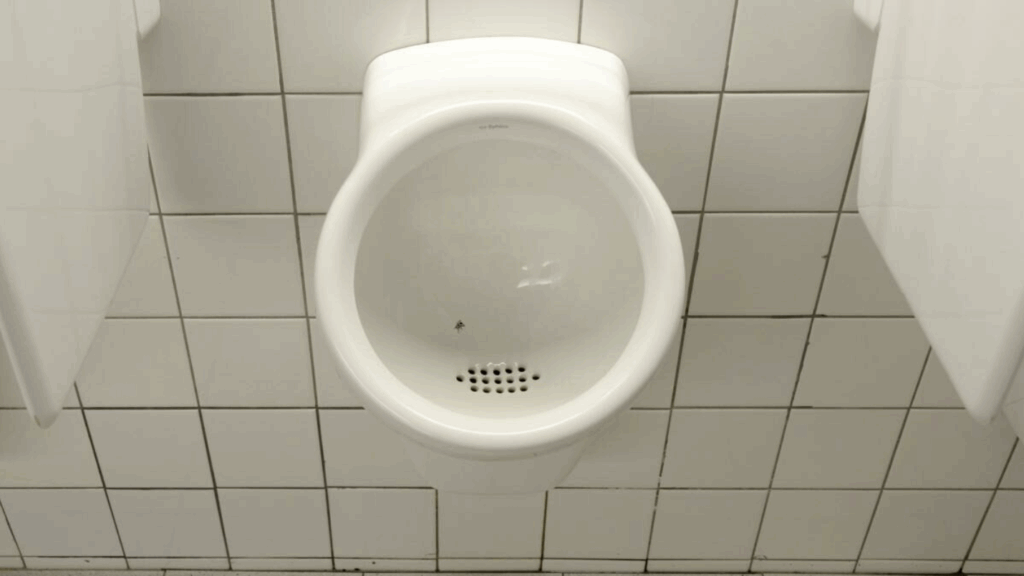
The iconic example of nudges: the fly in urinals
Here is a classic example of active design: the fly engraved on the urinals at Schiphol Airport in the Netherlands, introduced in the early 1990s by Jos van Bedaf, the head of cleaning services. Inspired by the idea of visual targets, he had a small fly engraved in the center of each urinal. The result: an estimated 80% reduction in splashing and approximately an 8% savings on the public restroom cleaning budget. This case has become Richard Thaler’s favorite example to illustrate a simple and effective nudge.
Other examples of nudges
Since then, visual nudges have become more widespread: staircases painted to look like piano keys in Stockholm, colorful pathways connecting key locations in certain Canadian cities… Everywhere, the principle is the same: encouraging people to move without forcing them.
The Use of Art to Change Our Behavior Today
In France: Development Initially Constrained by Regulations
For a long time, French regulations governing the visual design of public spaces were intentionally very strict. This rigor was not without purpose, as it aimed to ensure visual consistency accessible to all. Road markings, signage, and street furnishings adhered to precise standards, allowing everyone to understand the same visual language throughout the country. This uniformity thus provided a common frame of reference, essential for the safety and clarity of public spaces. However, because we see the same codes and forms repeated everywhere, they sometimes end up blending into the background, to the point where they no longer catch our attention.
Strong Growth in North America
Conversely, in some countries—particularly in North America—the freedom granted to public actors led, about a decade ago, to the emergence of spectacular and innovative initiatives. Free from heavy regulatory constraints, these initiatives have transformed public spaces into veritable testing grounds, blending unexpected forms, colors, and uses. This boldness surprises, challenges, raises awareness, and inspires action. It rekindles passersby’s desire to look at and engage with their surroundings.
New York: A Pioneer in active design
Starting in 2013, the City of New York, spearheaded by Bloomberg Philanthropies and in partnership with public health and urban planning agencies, issued an Executive Order requiring that all new municipal construction projects, as well as major renovations, incorporate the principles of active design. This initiative built on the Active Design Guidelines published in 2010, which served as a national benchmark. It included prioritizing stairs over elevators, installing signage encouraging their use, creating safe bike lanes and pleasant pedestrian paths, as well as features that promote walking, biking, and other forms of active transportation throughout the built environment. The goal was clear: to encourage daily physical activity, improve public health, and help residents rediscover the joy of getting around their city in alternative ways.
Accelerated growth in France since the Paris 2024 Olympic Games
These experiments, which have been shared over the years, eventually caught the attention of French policymakers. Gradually, attitudes have shifted and regulations have become more flexible. It is now possible to conduct pilot projects approved by the Ministry of the Interior when it comes to public streets. Although these processes remain lengthy and demanding, they now offer a real opportunity to test innovative interventions in public spaces. Thanks to this openness, local governments can now engage in active design. Guidelines, developed by the National Agency for Territorial Cohesion in conjunction with the Action Cœur de Ville and Terre de Jeux 2024 programs, are now being introduced.
The City of Blois, a Pioneer in active design France
The city of Blois stands out as one of the first to have launched a large-scale pilot program. City officials turned to PALM, a team specializing in large-scale artistic painting projects on all types of surfaces. In collaboration with local artists, PALM created colorful and dynamic designs around three school zones. The goal: to increase the visibility of crosswalks, highlight crossing areas, and reduce risky behavior. The results are clear: 65% of parents have noticed that vehicles are slowing down, 69% believe that bike lanes are more clearly marked, and 76% feel that children’s safety has improved. More than 95% of residents feel that these murals have beautified the street, confirming that aesthetics and functionality can reinforce one another.
How Painting Is Transforming the City Today
Today, active design is no longer limited to crosswalk markings on the ground. It has established itself as a flexible tool capable of being applied to all elements of public space and addressing a wide variety of challenges. Floors, walls, street furniture, utility areas… every surface can become a vehicle for functionality, identity, and positive behavior.
Road Safety
The Program “Sécurité Ecole by Art” from the Renault Foundation and PALM builds on the momentum generated by the local pilot project in Blois, but on a national scale. Each year, two to five French cities linked to the automaker’s industrial history benefit from these initiatives. The priority remains safety and visibility around traffic areas near schools, with the aim of encouraging compliance with traffic rules and raising awareness among all road users. The projects are designed in collaboration with residents and incorporate references to local heritage, transforming the streets into a common, functional, and meaningful language. In Les Mureaux, Boulogne-Billancourt, and Cléon, these creations serve simultaneously as visual landmarks, platforms for dialogue, and symbols of collective identity.
Fitness Trails
In Mur-sur-Allier, a fitness and visual trail has been created in the heart of the mountain village. Designed as a loop with no beginning or end, it serves both as a spatial landmark and a guiding thread in the daily lives of the residents. Dynamic lines, vibrant colors, and contemporary graphic accents shake up the traditional setting of a rural village, infusing it with new energy and revitalizing the image of a place with a distinctive heritage but in search of new vitality. Suitable for all fitness levels, this circuit takes 45 minutes to 1 hour and 30 minutes to complete, depending on physical condition, and alternates between uphill sections, stairs, flat areas, and rest and stretching zones. Far from being performance-oriented, it encourages varying the intensity of effort and engaging different parts of the body, thus offering a simple, daily exercise routine accessible to everyone.
The Fight Against a Sedentary Lifestyle
By combating sedentary lifestyles, this "disease of the century" that affects both young people and adults alike, the program addresses a major public health issue. Spending long hours sitting, whether at school, at work, or at home, increases the risk of cardiovascular disease, diabetes, and musculoskeletal disorders, while reducing energy levels and overall well-being.
Here, the layout offers a simple, local solution: regular exercise that is low-impact and integrated into daily life. Accessible to all, it puts movement back at the heart of village life, not through performance, but through enjoyment and consistency, two essential levers for establishing new habits in the long term.
Promoting Tourism
It also serves as a gateway for tourists: it guides visitors through the village’s key attractions, highlighting its strengths and creating a cohesive itinerary where each stop makes sense.
The use of contemporary designs and bright, almost flamboyant colors gives the route maximum visibility and breathes new life into this mountain village, which retains its traditional charm but bears the marks of time. This bold and assertive graphic design challenges traditional visual conventions and gives the site a renewed identity—one that is more dynamic and forward-looking.
Read: “Postcard” Murals: When Street Art Restores a City’s Identity
Urban Transformation
This transformation finds a natural echo in urban neighborhoods undergoing renovation or transition. Here too, art and active design a key role: floor patterns, reinvented furniture, murals... public spaces are adorned with visible signs that embody change.
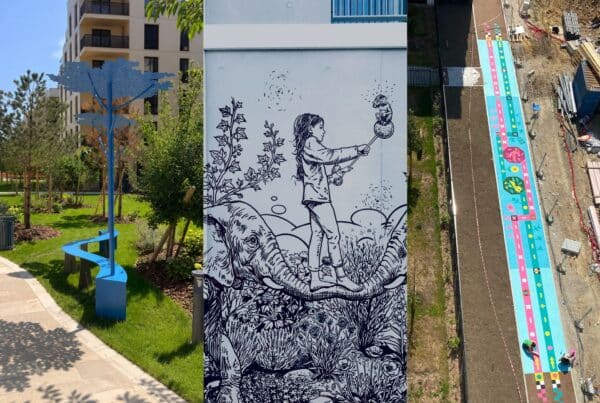
For residents, it sends a clear message: the neighborhood is evolving, reinventing itself, and everyone can play a part. For visitors, it proves that the city is alive and changing. The Carrefour des Limites (Raymond Queneau), at the junction of four municipalities (Bobigny, Pantin, Noisy-le-Sec, and Romainville), illustrates this dynamic with an artistic project designed to create visual and symbolic continuity between several territories, sending a loud and clear message of renewal.
Artistic murals: a solution for spaces that are usually neglected
The Stairs
In some public or communal buildings, stairwells are being transformed into veritable art galleries. Immersive murals, dynamic patterns, and stimulating color palettes create a pleasant environment that encourages people to take the stairs rather than the elevator. This simple gesture, repeated by hundreds of users every day, becomes a discreet but effective lever for soft mobility and preventive health.
Technical Areas
Even technical or utility areas can be redesigned. Recycling areas, bicycle storage rooms, recycling shelters, and storage areas can be transformed into visible and attractive spaces through art and color. This change in image encourages responsible behavior and promotes collective ownership. By highlighting these spaces, we also send a strong message: soft mobility, sorting, and reuse are an integral part of everyday life and deserve an aesthetic treatment worthy of central public spaces.
Our Approach to Artistic Painting Projects
The Real Impact
active design a matter of aesthetics or decoration. It is a development strategy that places people, their health, and their relationship with space at the heart of the city. To deliver on its promises, it must be based on strong involvement from residents right from the design stage, so that each intervention becomes part of their history and a source of pride. The most successful projects are born out of a close alliance between art and engineering, where technical innovation is put at the service of beauty and utility.
Success Factors
Its success also depends on flexible regulatory frameworks, which are essential for testing and adjusting systems before they are rolled out on a large scale. Sustainability is not limited to the choice of resistant and eco-friendly materials: it also includes anticipating upkeep and maintenance in order to preserve the visual and functional impact of the installations over time. Designing works that age well, whose colors and shapes retain their appeal even after several years, is essential to ensuring that the initial effect lasts.
Custom Projects
Finally, an active design that is truly alive must remain adaptable. Interventions that evolve with uses, seasons, or local events continue to surprise and engage. Because ultimately, the ambition is not just to paint a sidewalk, a wall, or street furniture, but to create a visual language that inspires, brings people together, and accompanies the movement of cities and their inhabitants.
See also