Active design is a public space arrangement that encourages users to adopt certain behaviors. For example, active design promotes physical activity or eco-friendly actions. Our company designs and produces active design projects throughout France. Discover our latest projects for local authorities or organizations. Finally, contact us for any questions or a quote.

active design definition and history
Active design is a concept that originated in the USA in the 1980s. Initially, it was a response to the increasing sedentary lifestyle of part of the population. The primary goal of active design was therefore to encourage physical activity through urban planning.
Today, the concept has spread worldwide. Beyond physical activity, it encourages responsible and civic behaviors. For example, regarding road safety or eco-friendly actions.
Examples of our active design projects
Filter
The 5 main objectives of active design
Today, uses have evolved and active design meets 5 objectives:
- Free use of spaces
- Diversity and inclusion
- Encouraging good behaviors
- Ease of use
- Improving the quality of public spaces
Thus, active design responds in real-time to user actions and needs. This creates personalized and engaging experiences. Furthermore, it helps improve user satisfaction.


Active design: transforming public spaces with art
Artistic interventions for positive behaviors
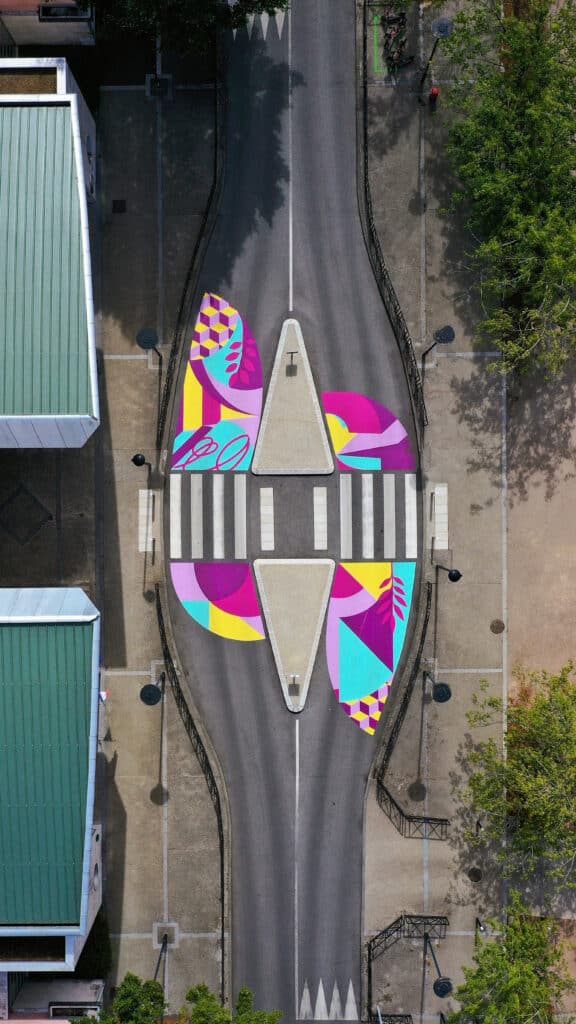
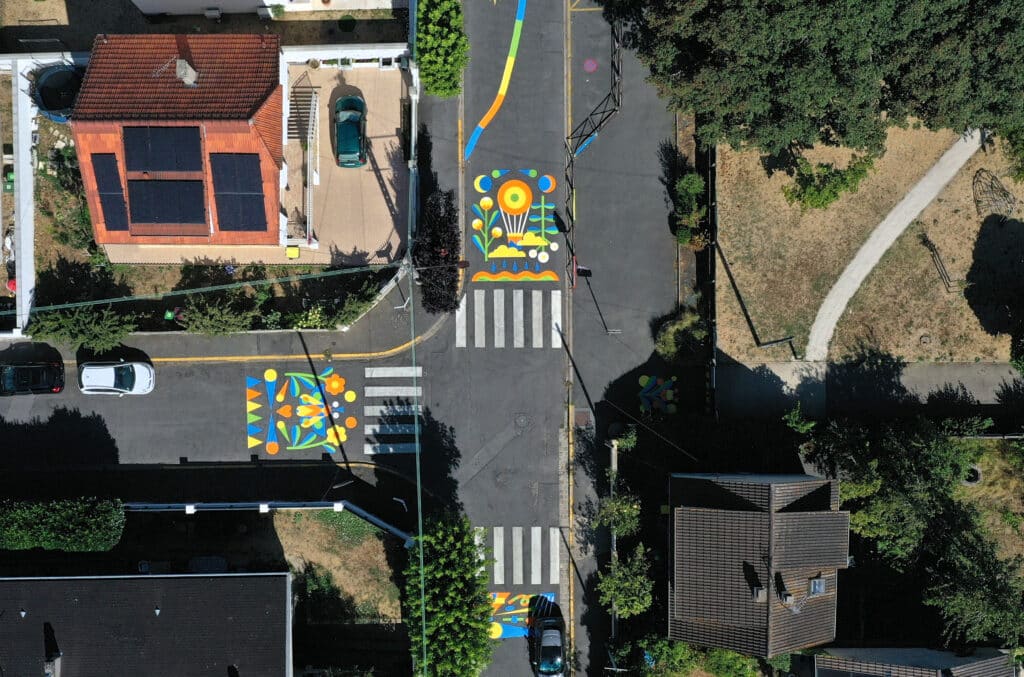
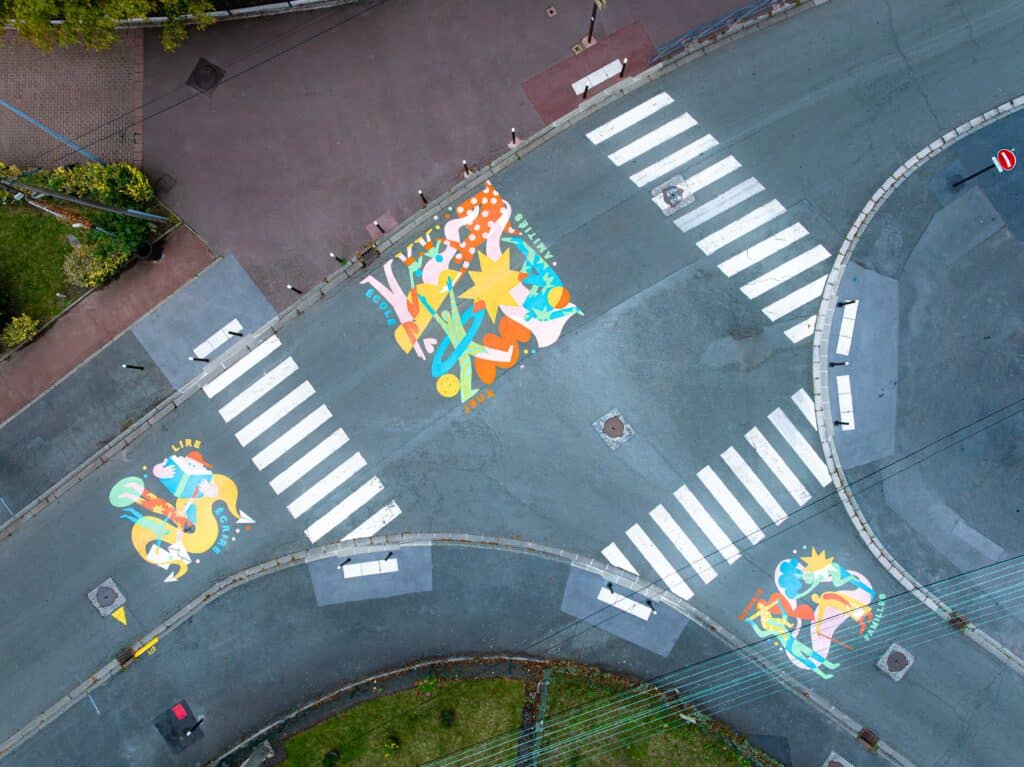
Active design, such as colorful pedestrian crossings or patterns painted on the ground, transforms public spaces into safe and engaging environments. These visual creations attract attention and positively influence user behavior, encouraging them to respect pedestrian zones or engage in physical activities. By combining aesthetics and functionality, active design revitalizes urban spaces and improves residents' daily lives.
A tailored solution for local communities
Many local governments are adopting “ active design ” to beautify and make their public spaces safer. These initiatives—whether aimed at revitalizing a neighborhood, making school zones safer, or enhancing the appeal of pedestrian areas—address the specific needs of each community. By revitalizing neglected spaces, “ active design ” helps create welcoming and safe environments for everyone.
The impact of active design
The importance of active design for inclusive and safe cities
Active design plays a crucial role in improving the safety and aesthetics of public spaces. Creative ground markings make pedestrian crossings more visible, while colorful patterns encourage gentle modes of transport like walking or cycling. These solutions also encourage residents to take ownership of these places, thereby strengthening their sense of belonging and security.


Active design: strengthening city identity and attracting visitors
Active design helps shape the visual and cultural identity of cities by transforming public spaces into unique and memorable landmarks. These artistic interventions, such as patterns painted on the ground or colorful pedestrian crossings, create a strong visual language that reflects the history, values, or ambitions of an area. They allow each place to stand out and embody its own identity, thereby strengthening the sense of local pride among its residents.
By making urban spaces more attractive and photogenic, active design also plays a key role in attracting tourists. Unique and bold artworks, visible from the ground, become true landmarks or points of interest, sparking visitors' curiosity and revitalizing city centers or less frequented neighborhoods. By combining art, functionality, and storytelling, active design transforms cities into captivating and engaging destinations.
Interactive play areas
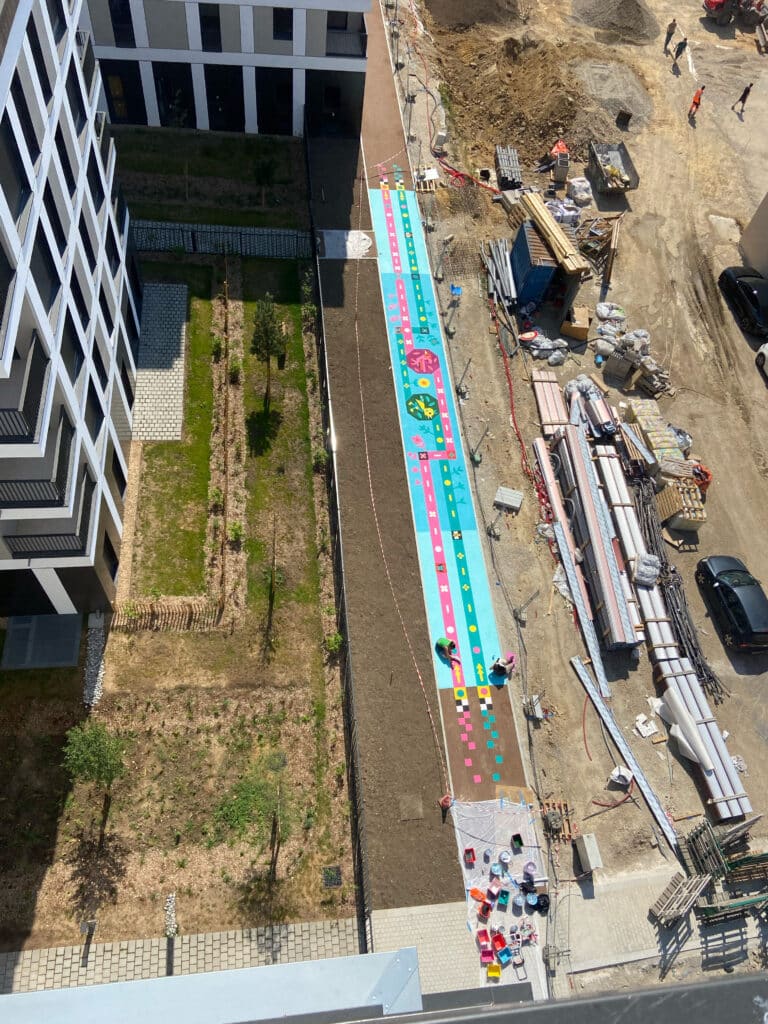
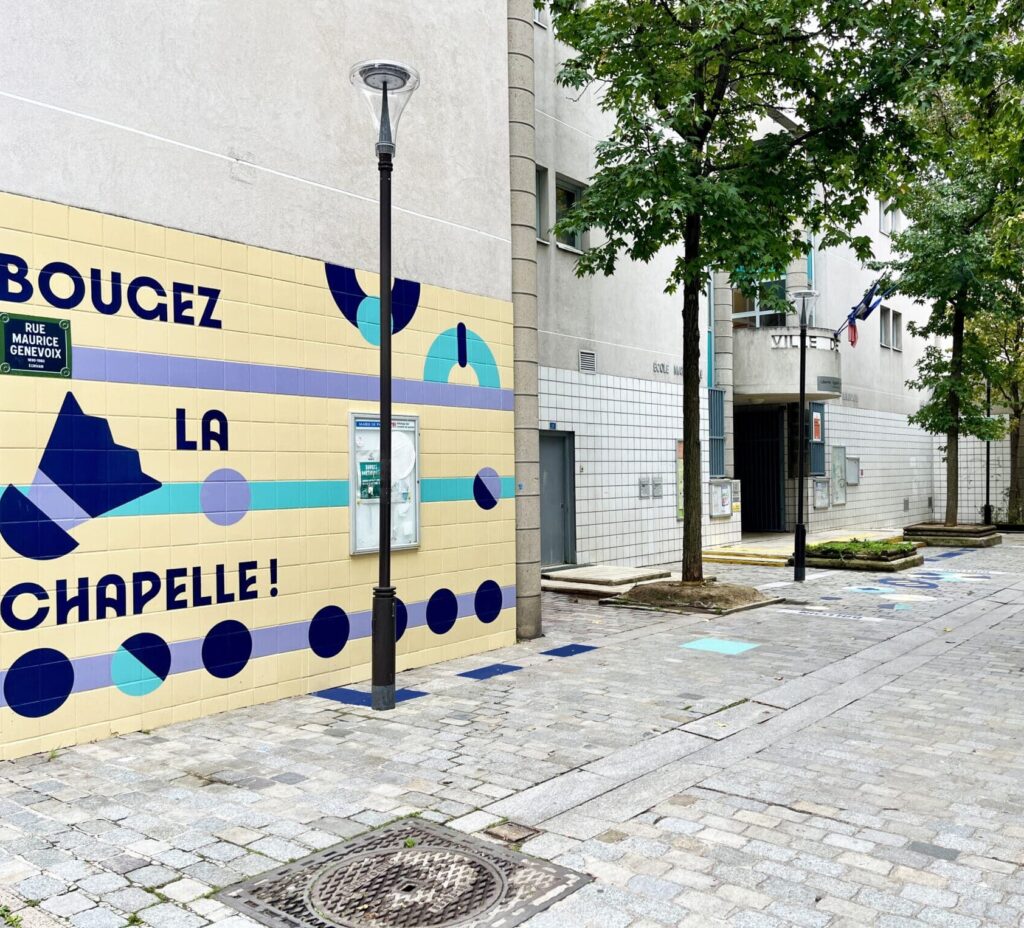
Playful and colorful patterns, such as giant hopscotches, labyrinths, or sports course markings, are painted on the ground in parks, schoolyards, or public squares. These installations encourage play, physical activity, and social interaction in often underutilized spaces.
Artistic bike paths
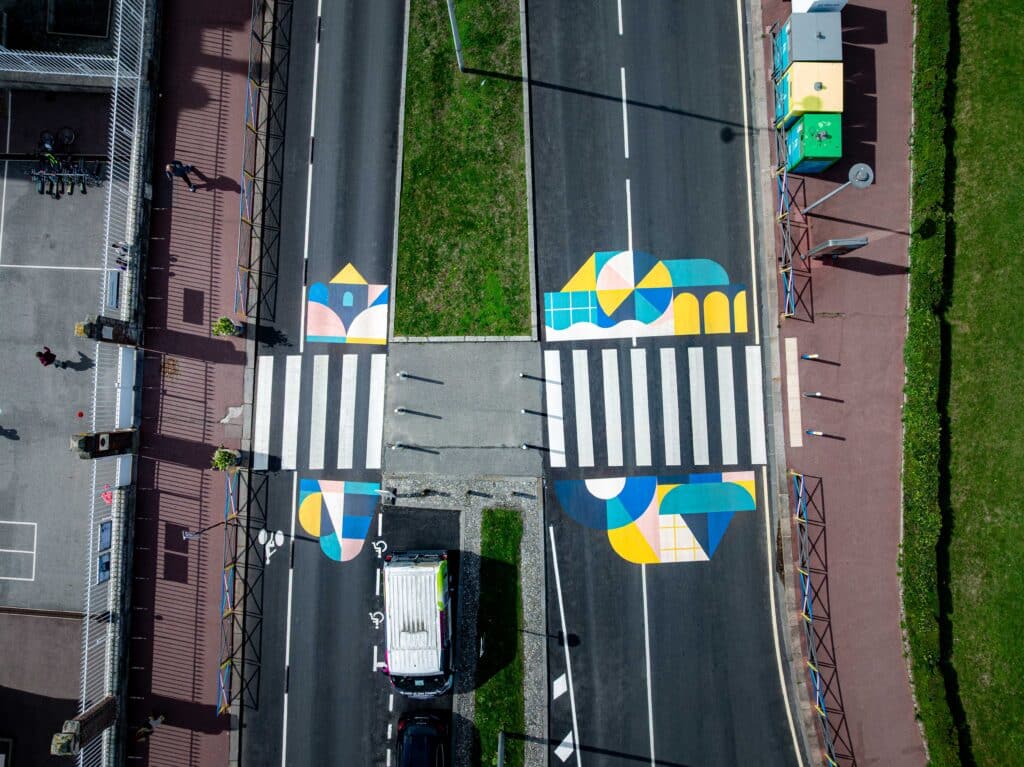
Bike lanes can be transformed with creative visual designs and vibrant colors, making them more visible to cyclists and motorists while adding an aesthetic touch to urban infrastructure.
Safety zones in front of schools
Creative ground markings, such as footprints, animals, or playful patterns, signal to children and drivers the areas where they should slow down. These zones contribute to improved safety while positively engaging users.


Where can active design be implemented?
Specifically, an active design project can include several dimensions:
- signage (ground markings, wall markings…)
- urban pathways
- street furniture
- playful artwork
- artistic playgrounds
- construction or renovation of urban spaces.
The main stages of an active design project
Understanding users
First, it's essential to understand the people who use the space. To do this, identify their needs, habits, preferences, and behaviors.
Define the project's objectives
Next, determine what you aim to achieve with this project. For instance, is it to encourage social interaction, promote sports, or improve safety?
Develop the design
Then, use the gathered information to create a design. This could involve interactive art installations, urban games, awareness tools, and more.
Involve various stakeholders
At the same time, involve local authorities, residents, businesses, and community associations.
Consider sustainability and accessibility
Finally, ensure the project is sustainable and accessible to everyone.

Examples of active design projects

School Safety by Art: when art and active design the city
PALM and the Renault Foundation are launching the national program Sécurité École by Art, which reinvents school surroundings through urban art and active design. In Les Mureaux, the project's first city, ground murals and graphic pathways transform sidewalks and traffic areas into colorful, clear, and safe spaces. With artist Amy Jones, this artistic and functional intervention raises awareness about road safety while bringing life to the school neighborhood.
- Client: Renault Foundation
- Location: Les Mureaux (78)
- Artist: Amy Jones
- Surface area: 2200 m²
- Budget: approximately €150k
Active design to create an outdoor play library
The Pré Saint-Gervais town hall called on us to create an outdoor toy library.
These ground murals by Alix d’Anselme offer a new playground for the neighborhood residents. They feature floral patterns, animals, geometric shapes, and more. A great example of artistic active design.
To complete this project, we organized creative workshops centered around participatory murals with the neighborhood residents.
- Client: Pré Saint-Gervais City Hall
- Location: Pré Saint-Gervais (93)
- Artist: Alix d’Anselme
- Surface area: 400 m²


Active design to prevent road accidents near schools
The city of Blois commissioned PALM for a project combining active design and road safety. Our artists painted eight areas (schools, intersections, pedestrian crossings, bike paths, etc.) around 3 schools in the city.
First, the project aimed to make these different spaces more identifiable. Then, the goal was to encourage drivers to slow down and pay attention to other road users.
- Client: City of Blois
- Location: Blois (41)
- Artist: La Ménin'gère
- Area: 1,000 m²
Active design to encourage walks in a park
The wind area is a 28-hectare space developed in the 1980s to host major events. For the Paris 2024 Olympic Games, it has been transformed into an art trail.
To achieve this, we created ground murals to form an artistic path. This path encourages users to walk and run in the park. The chosen colors are, of course, a reference to the Olympic Games.
- Client: La Plaine Commune
- Location: Dugny (93)
- Area: 4,800 m²


active design facilitate traffic flow at an intersection
In Bobigny, PALM supported the transformation of a crossroads undergoing significant urban change, with the upcoming arrival of the T Zen line. The objective: to make the space more legible, welcoming, and safe for pedestrians.
A monumental ground mural, designed by artist Alice Beck, encircles the crossroads and guides residents and visitors through pedestrian crossings, sidewalks, and metro access points.
Its organic shapes and vibrant colors make this place a distinctive landmark, inviting everyone to reclaim the public space.
- Client: Seine-Saint-Denis Departmental Council
- Location: Bobigny (93)
- Artist: Alice Beck
- Area: 500 m²