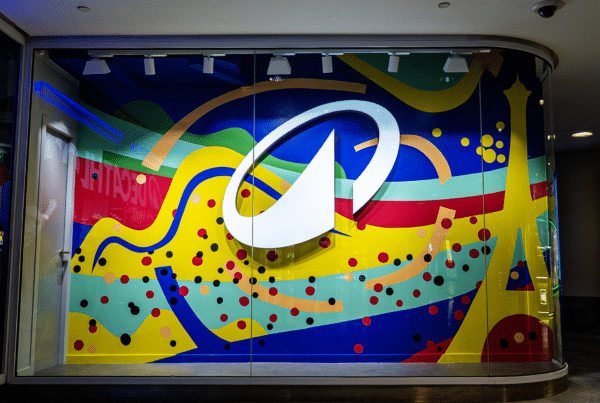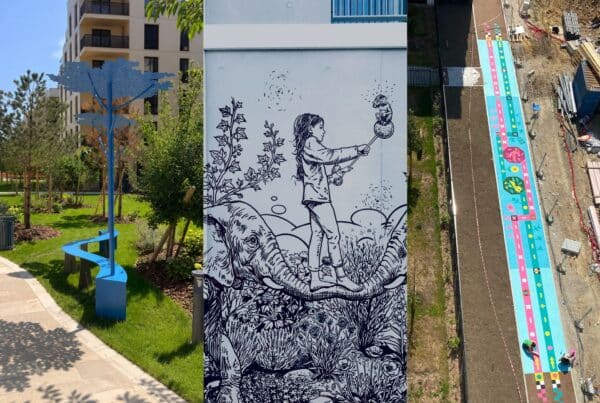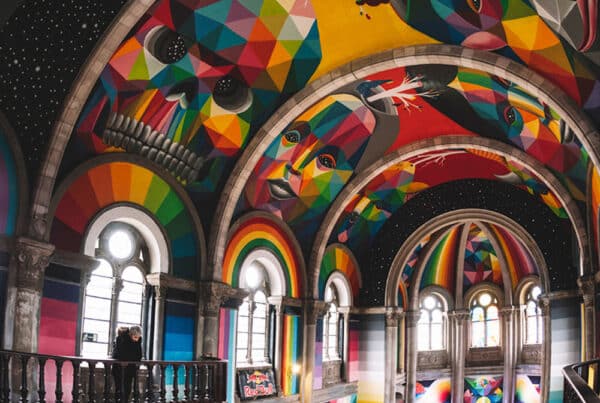
Mental health is often considered on an individual level. However, the public spaces we navigate daily are the primary gateway to our well-being: streets, squares, facades, and parking lots influence our moods, rhythms, and relationships.
Why integrate art and color into public spaces?

Site-specific works to soothe, energize, and connect
Our approach combines urban art and active design to transform journeys into clear and comforting experiences:
- Adding artistic elements to the street can reduce anxiety, stress, and negative mood, with effects comparable to greening interventions.
- Squares and parking lots decorated with murals reduce perceived stress and improve mood.

Colorful and visually rich environments are associated with a higher perceived level of comfort and reduced stress compared to monotonous spaces.
In other words: painting a wall, a floor, or a facade isn’t just an aesthetic act—it’s an urban action that affects the brain and our emotions.
PALM: transforming endured places into chosen spaces

As practitioners of in situ art, we observe daily that a well-designed mural can make a site more welcoming, reduce daily anxiety, and strengthen social connection. Each project is custom-designed to serve users, local values, and contribute to a more humane city.
Mental health is becoming a global priority. What if we considered color, art, and active design as true allies for urban well-being?
To make art a living and shared experience, contributing to collective well-being.
See also on our blog