What is hand-painted advertising hand-painted advertising a promotional image created directly on a wall, facade, or other architectural surface by hand by specialized painters. These open-air murals were the first form of urban media. Whether advertising a product, marking a store, or glorifying a power, these paintings tell the story of visual communication. They are at the crossroads of art and advertising, combining creativity, craftsmanship, and strategic messaging.
When murals told the story of the world
In the Chauvet Cave, 30,000 years ago, lions, bison, and rhinoceroses seem to be running across the stone. These frescoes were not decorative. They were used to teach young hunters about animal behavior: we see herds on the move, sometimes wounded, like visual manuals for learning where to strike or how to approach prey. They also had a ritual dimension. Created in deep galleries by torchlight, they undoubtedly accompanied collective ceremonies to attract the protection of the spirits and strengthen the cohesion of the clan before the hunt.
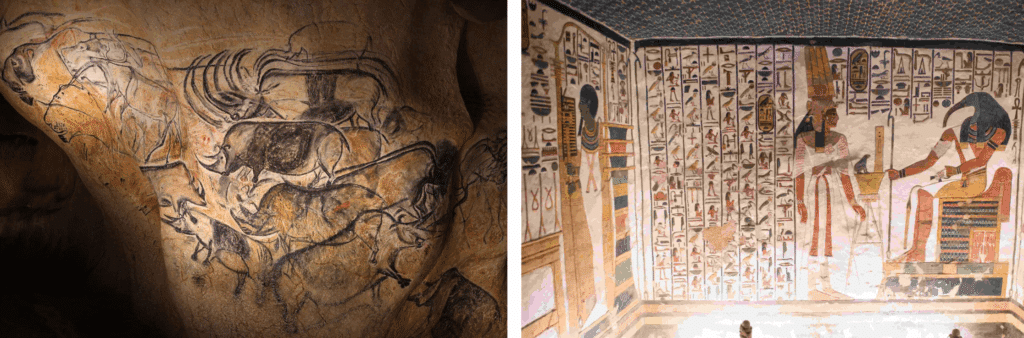
In Egypt, frescoes adorn temples, tombs, and palaces with deeply strategic functions. They recount the military victories of the pharaohs and remind everyone of their role as protectors of the country. Coded and educational, they depict scenes of offerings or harvests that remind inhabitants of the rituals they must perform to maintain cosmic order. They also serve to legitimize power: the pharaoh appears in a monumental and divine form, embodying the stability and continuity of the kingdom.
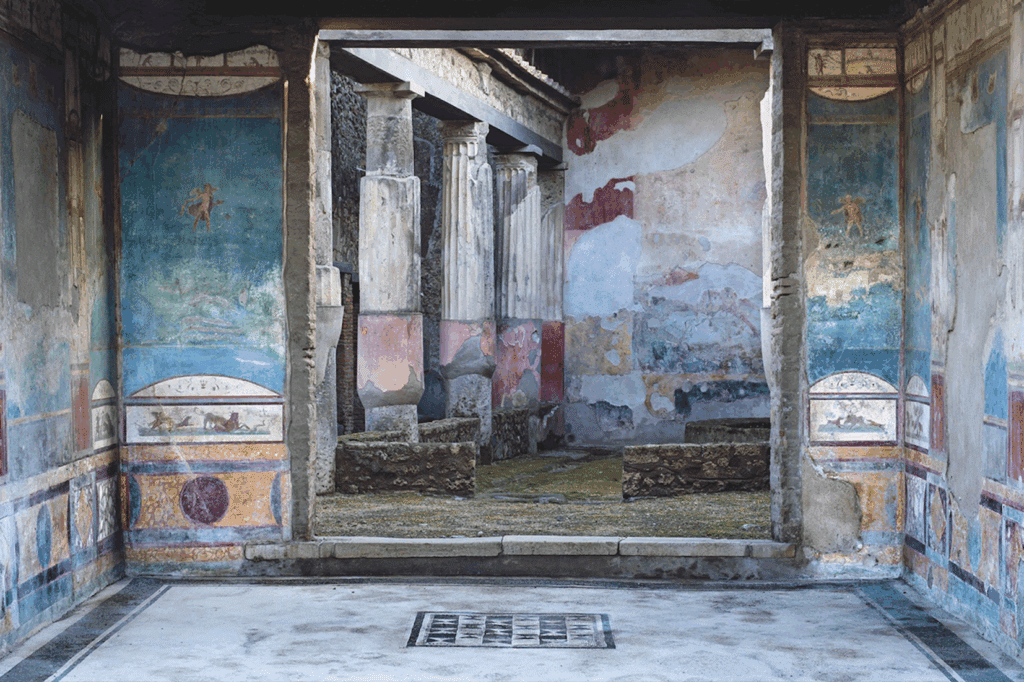
In ancient Rome, painting became much more urban and pragmatic. On the walls of Pompeii, frescoes advertise gladiator fights, festivities, or products for sale. Some facades promote taverns, local wines, bakeries, or workshops, transforming the city into a vast open-air advertising medium. Even politics finds its way onto the walls with election slogans painted in support of particular candidates.
Visual art thus becomes a direct means of informing, appealing to, and influencing the population in their daily lives. Mural painting is therefore more than just decorative art: it is a tool for public communication that guides behavior, promotes products and events, and imposes the image of power.
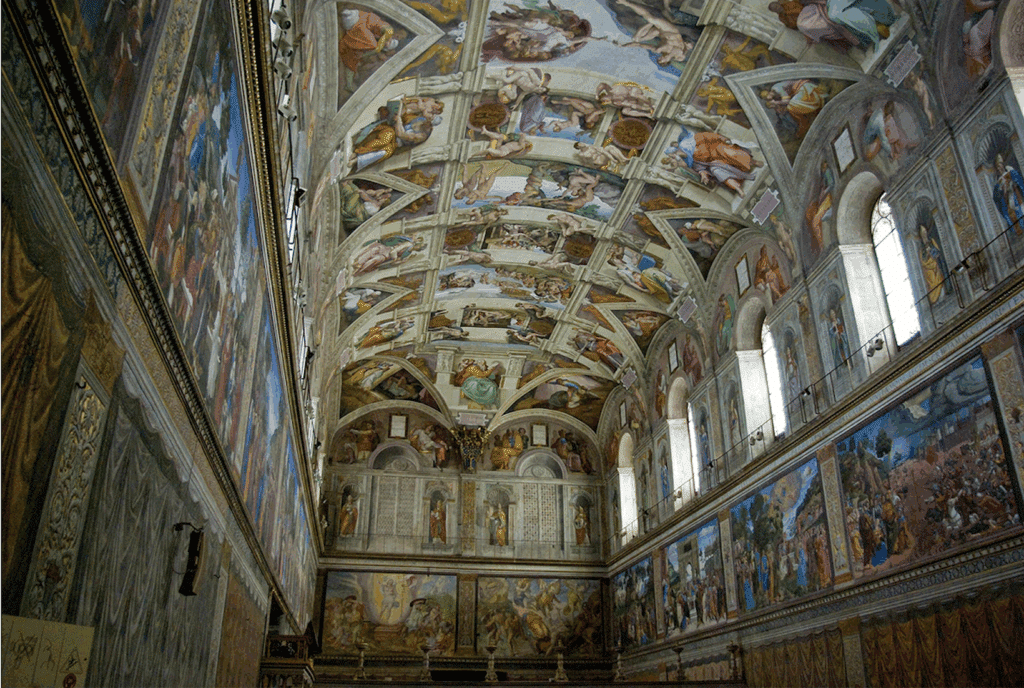
The Renaissance turned painting into a powerful tool of influence through art patronage. The Medici family in Florence financed painters and sculptors to associate their name with the artistic and spiritual greatness of the city. Some biblical frescoes discreetly incorporated their portraits, sometimes as wise men, transforming art into a political and social message.
Patronage was thus a form of early advertising: it connected the artist, the patron, and the community in a work visible to all. The Sistine Chapel, painted by Michelangelo at the instigation of Pope Julius II, perfectly embodies this principle. A spiritual monument for the faithful, it is also a demonstration of power: every visitor who looked up saw the artistic greatness of Rome, the authority of the pope, and the power of the Medici.
Let's jump forward in time and get closer to our era... In the 19th century, painting took to the streets. From 1840 to 1880, in Europe, and particularly in France, the facades of towns and villages were covered with colorful advertisements that could be seen from afar. The Dubonnet, Byrrh, and Suze signs became veritable urban landmarks, embedding the brands in the daily lives of passersby. In the United States, the phenomenon took on a similar scale on the brick facades of large industrial cities such as New York, Chicago, and Cincinnati, often promoting everyday products, tobacco, and remedies.
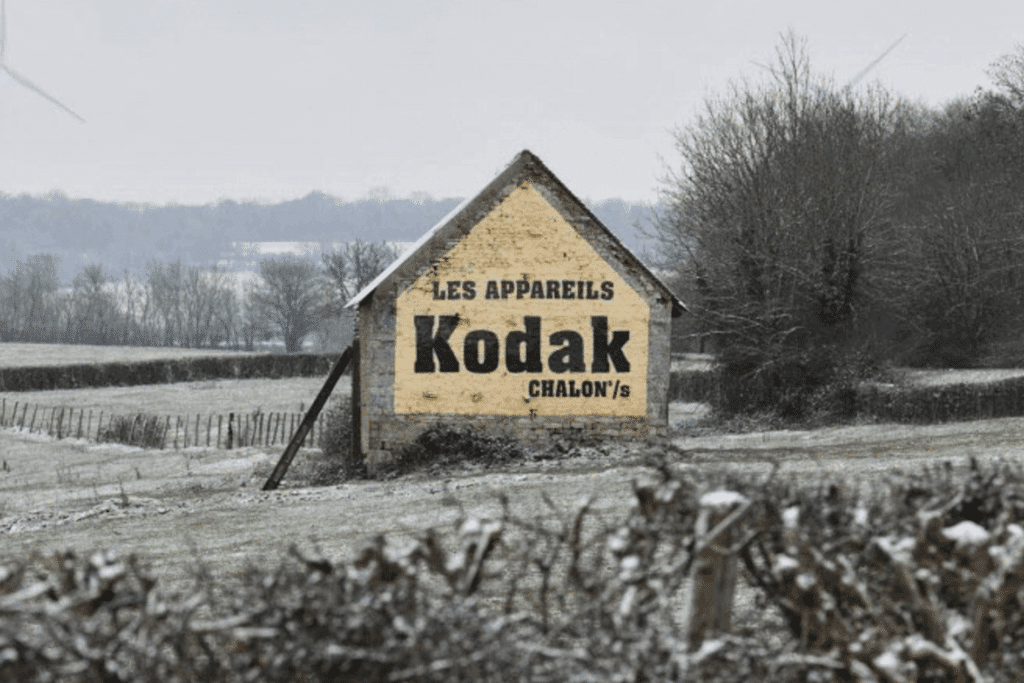
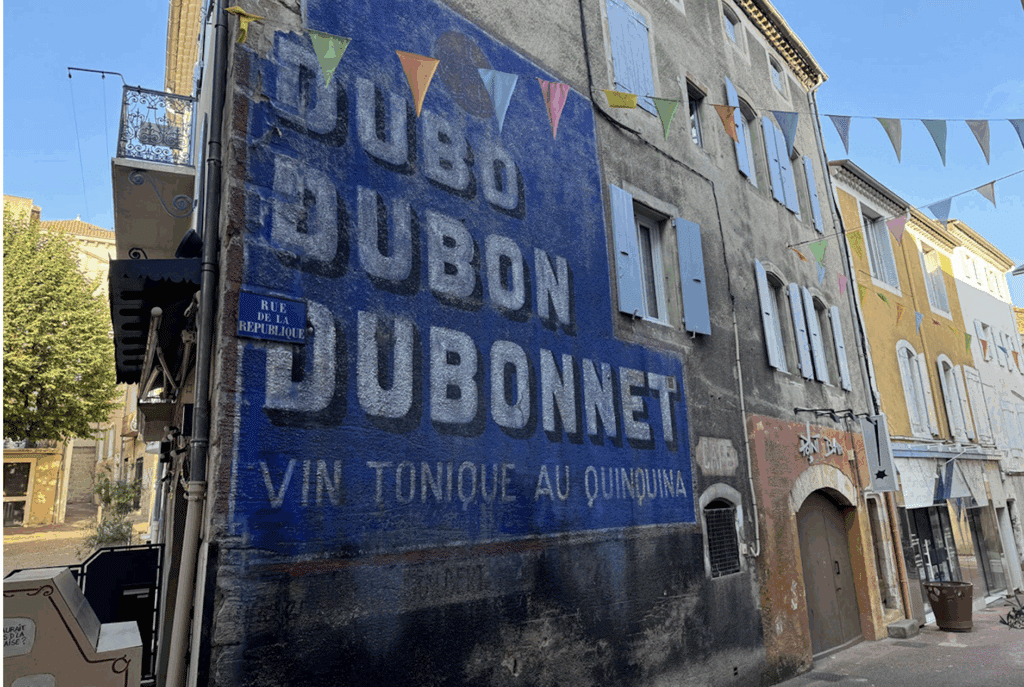
Over time, these murals have often faded, sometimes half-erased by the elements. They are called ghost signs, literally "ghost signs" or "ghost murals." These remnants of hand-painted advertising, visible in Lyon, Marseille, and Paris, as well as New York and New Orleans, fascinate historians and photographers alike. Their charm lies in their nostalgic quality, giving the impression of traveling back in time through the walls of our cities. Today, some of these murals are classified and restored, proof of the attachment to heritage that they inspire. They remind us that before the digital age, the city itself told the story of its products and its history, layer after layer, on its facades.
The decline of hand-painted advertising
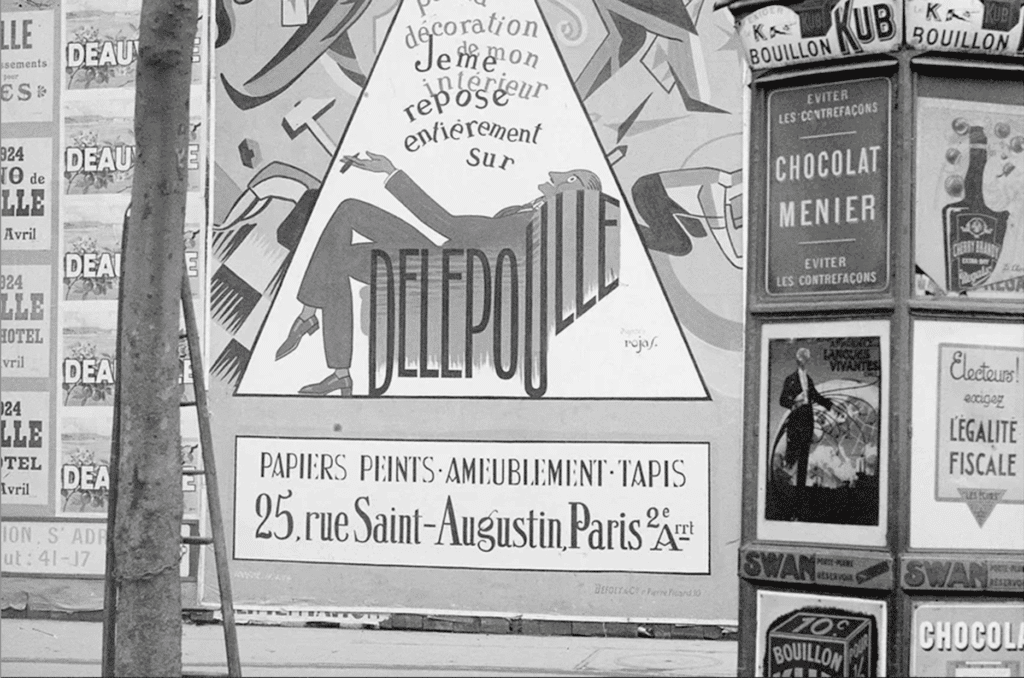
After several centuries of glory, hand-painted advertising began a long decline at the end of the 19th century, swept away by industrialization and the emergence of new forms of communication. The turning point came in the 1880s with the rise of the printed poster. Frenchman Jules Chéret, a master of color lithography, revolutionized urban advertising. For the first time, it became possible to mass-produce color images, distribute them quickly, and renew campaigns at a steady pace. Posters transformed cities into open-air galleries, covering poles, fences, and facades. They offered unprecedented flexibility: a failed image could be replaced in a matter of days, whereas a murals required weeks of work and a significant investment.
Gradually, murals, which were more expensive and slower to produce, were confined to a few major brands and strategic locations, while posters established themselves as the new modern, fast, and effective medium. This marked the beginning of an unequal battle between the ephemeral nature of posters and the permanence of murals, a prelude to the golden age of print advertising.
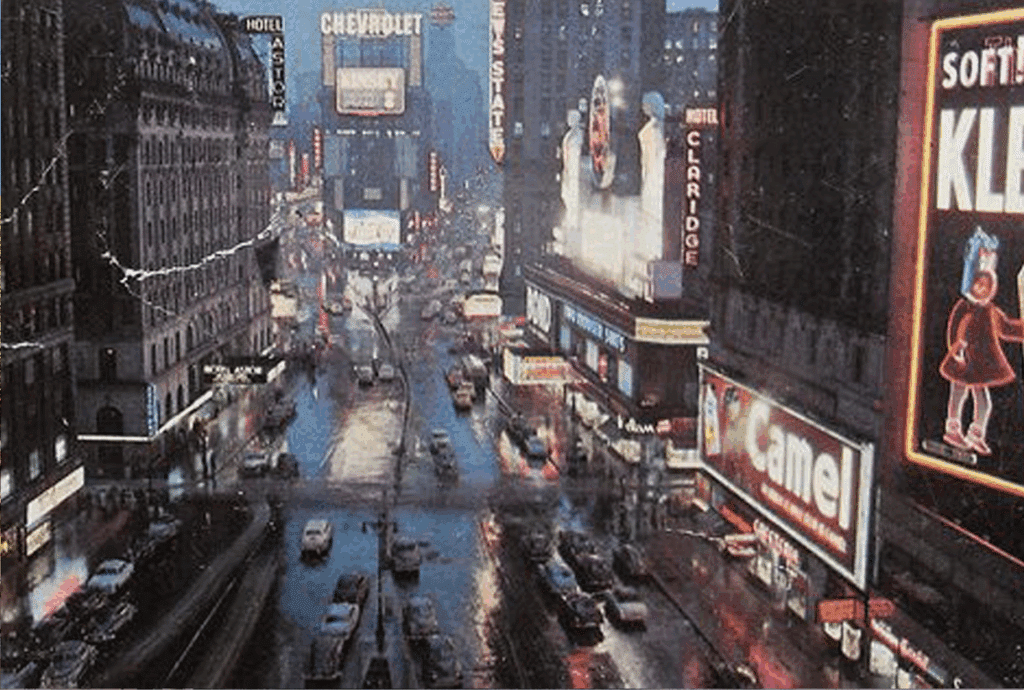
Throughout the 20th century, speed and repetition became the watchwords of communication. In the 1950s, the arrival of neon signs transformed city nights. The luminous tubes offered unprecedented visibility, attracting attention both day and night. Hotel, soda, and movie theater brands illuminated their names above the streets, relegating murals to the shadows.
The 1960s and 1970s saw the explosion of offset printing. Large-format posters invaded bus shelters, hoardings, and municipal billboards. Produced on an assembly line and renewed every week, they imposed a pace of dissemination that rendered the slowness of hand-painted posters obsolete. Repetition, rather than beauty, became the secret to notoriety. At the same time, new media reinforced this shift.
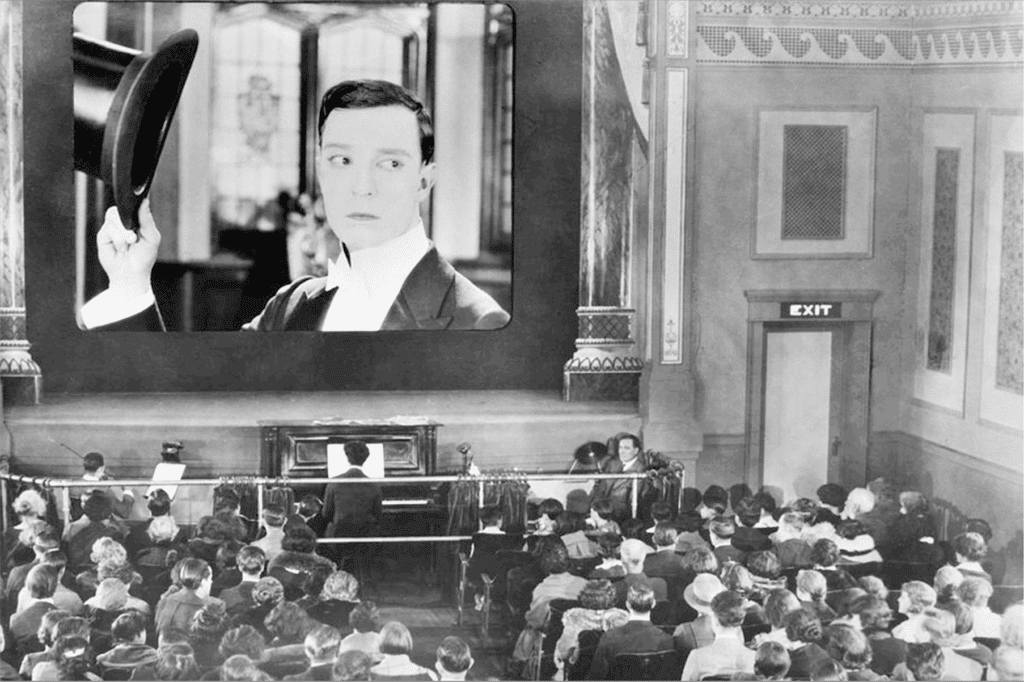
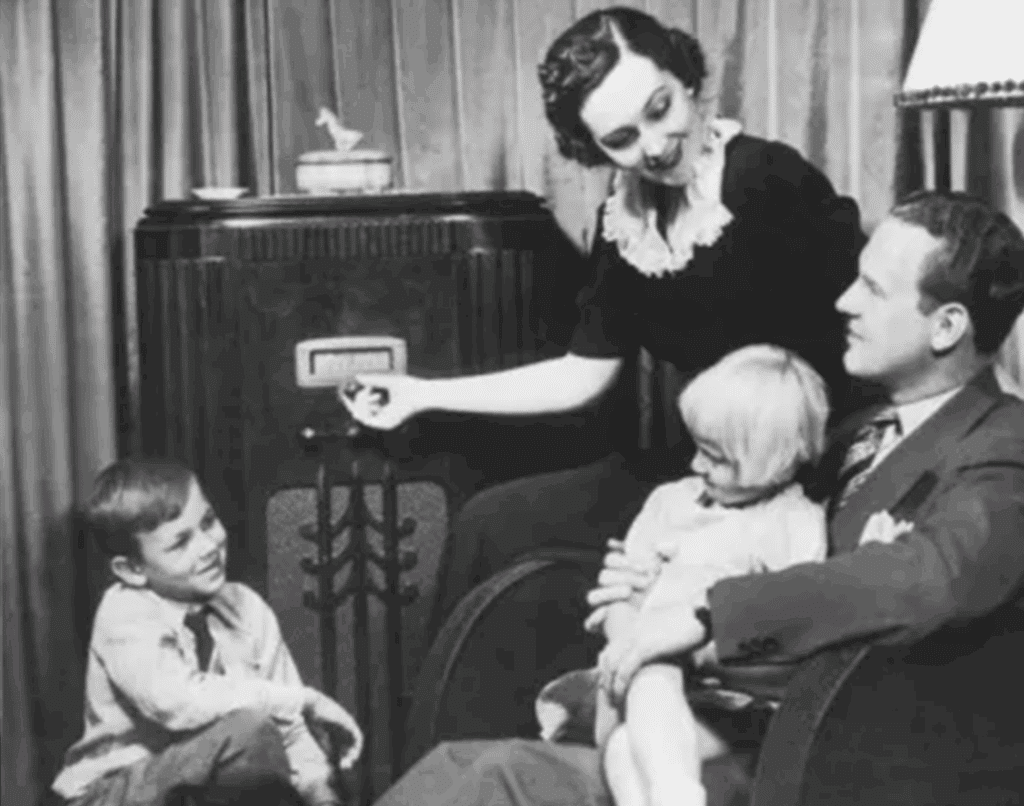
Radio, followed by cinema advertising, introduced voice and sound, giving advertising an immersive power that no still image could match. In the late 1950s, television entered homes and completed the transformation of the media landscape. Short, powerful commercials combining music, animation, and narration became an integral part of everyday life. Advertising was no longer content to cover walls: it invited itself into living rooms and the collective imagination.
The digital revolution of the 2000s completed this transformation and pushed the advertising model to its peak. Screens, omnipresent in urban spaces and in our private lives, transformed cities and our habits into a continuous flow. In streets, train stations, subways, and shopping malls, digital billboards broadcast messages on a loop, giving our eyes no respite. On the internet (via computers, smartphones, tablets, e-readers, etc.), banners, pop-ups, and programmatic ads dominate every page and every app.
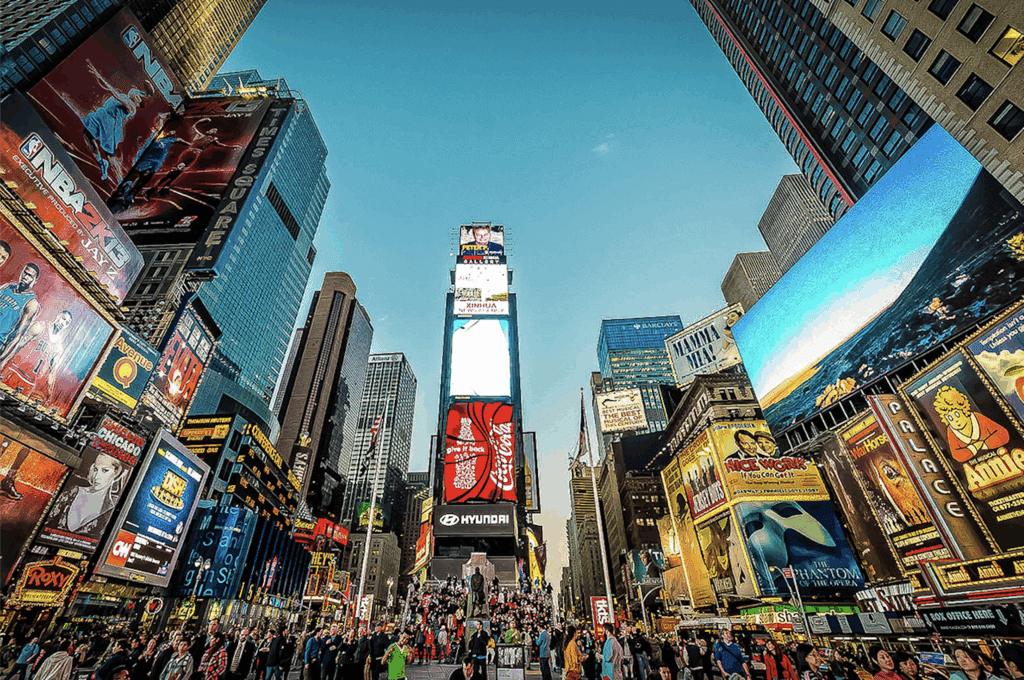
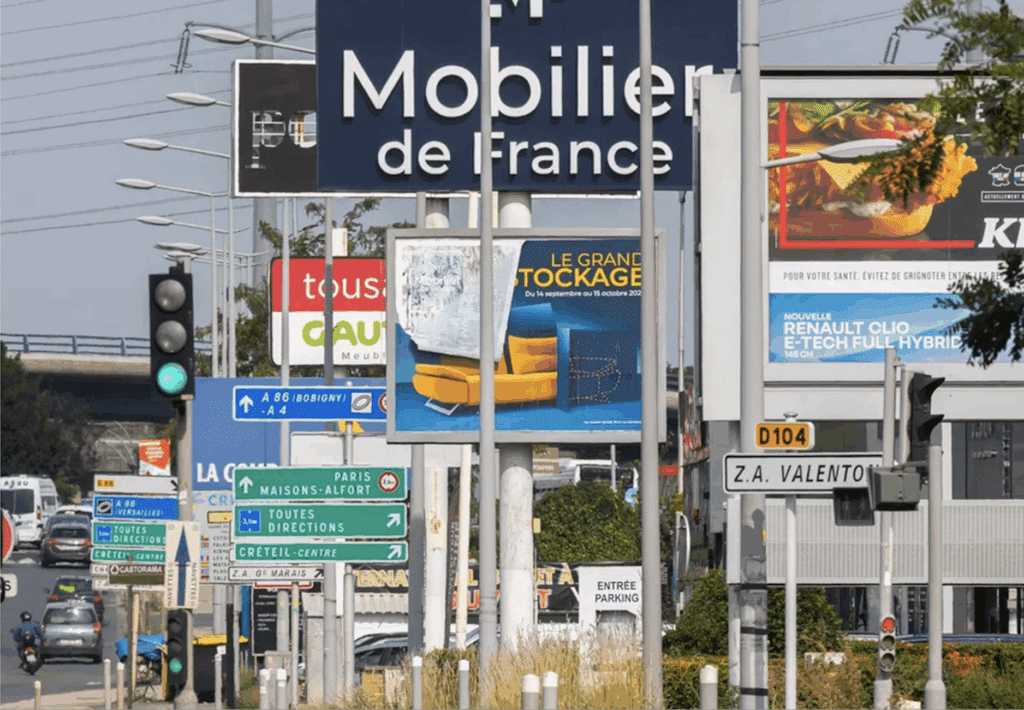
Everywhere, all the time, advertising seeks to reach us, to capture our attention for a few seconds before disappearing into the next wave. Social media has become an endless gallery of images, where messages follow one another until they blend into each other. But in seeking to reach the widest possible audience, to be everywhere all the time, advertising has ended up diluting itself in its own excess. In this avalanche of images and sounds, nothing really stands out anymore. The message loses its power. We see without looking. We hear without remembering. This logic of always more has reached its limits. To exist in a saturated world, advertising can no longer be content with repetition. It must touch, leave a mark on the memory, create an emotion. It is precisely this need for memorability and authenticity that will pave the way for new, more qualitative approaches, capable of captivating rather than inundating.
Recommended Reading: The History of Murals: From Antiquity to Street Art
Urban renaissance: when hand-painted advertising to slow down again
After decades of visual and auditory saturation, advertising is undergoing a transformation. In a world where images flash by at breakneck speed and the eye eventually tires, a new trend is emerging: slowing down. This renaissance began in 2004 with Colossal Media in Brooklyn. The New York-based company chose to reinvest in the craft of brushwork to create monumental murals by hand, visible from several streets away. In the United States, advertising regulations are more flexible than in Europe, allowing Colossal Media to occupy vast facades and offer spectacular formats. Each murals an open-air performance: for four or five days, passersby witness every stage of its creation.
The street becomes a theater, and advertising becomes a collective event. This approach, which could be described as "slow publicity," takes the opposite tack to the frenetic pace of modern communication. It values patience, craftsmanship, and quality of execution, whereas traditional advertising relies on speed and repetition. Each murals an experience in its own right, capturing attention through the power of the moment and the memorability of the spectacle. But its impact is not limited to the ephemeral: it also becomes part of the daily lives of passersby. We see it on our way to work in the morning, we see it evolve the next day, and we observe its metamorphosis over the days. This visible evolution creates a relationship over time, an almost emotional familiarity, as if the city itself were telling a story through its walls.
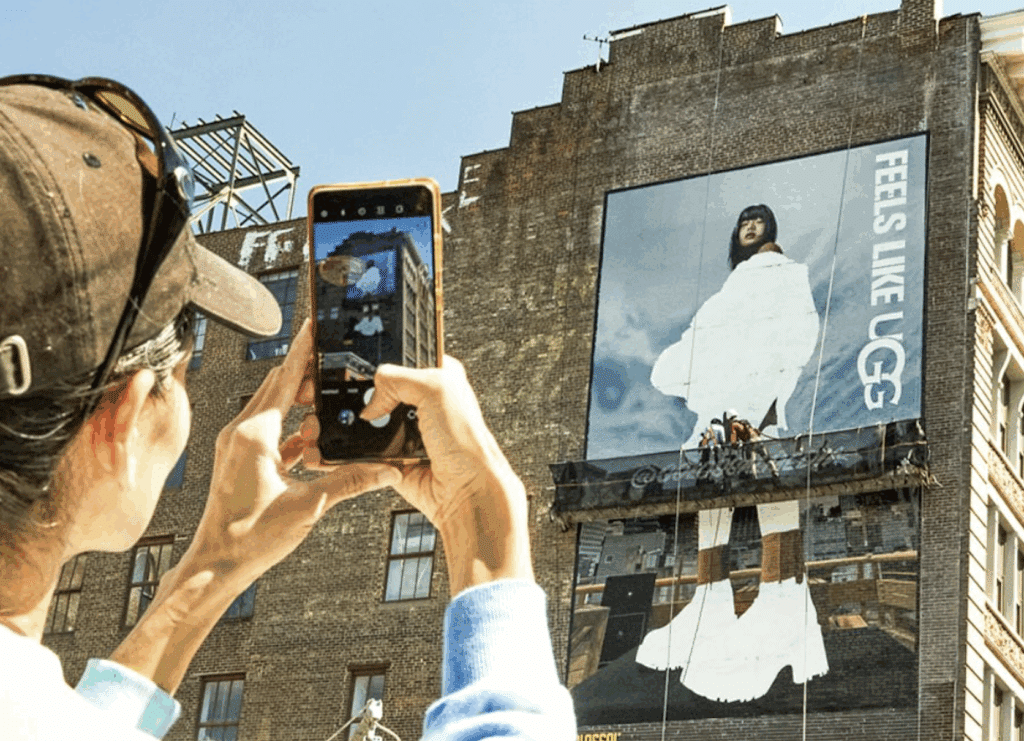
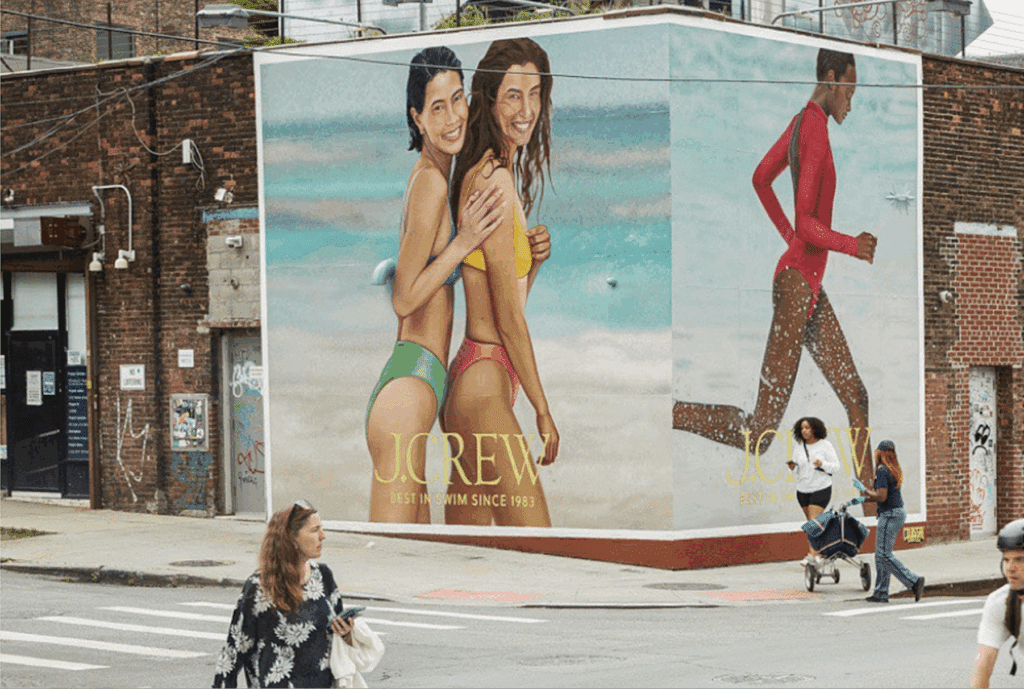
In Europe, the revival of hand-painted advertising a different form, shaped by much stricter urban regulations. French cities, keen to preserve their aesthetics and limit the invasion of advertising, heavily regulate billboards in terms of their location and size. In this context, the company PALM (Peint À La Main) is continuing the movement initiated by Colossal Media, adapting its creations to French sensibilities, where the public remains very attached to the hand-painted advertising , and retains the idea of doing less, in terms of size and redundancy, but above all of doing better!
Be careful, though, the idea is not to reproduce this model ad infinitum... Because while the first hand-painted advertising , and the second still seduces, the magic eventually wears off if you simply repeat the formula, changing only the image and the advertiser. To maintain attention and emotion, you have to constantly reinvent yourself and not rest on your laurels. This return of hand-painted advertising therefore hand-painted advertising a new philosophy, which no longer seeks only to impose itself on the landscape, but to invite itself into everyday life. Brands understand that their value lies less in the quantity of impressions than in the quality of the experience. A successful intervention leaves a lasting emotional imprint, capable of transforming a passerby into a spectator, and then a spectator into a brand ambassador.
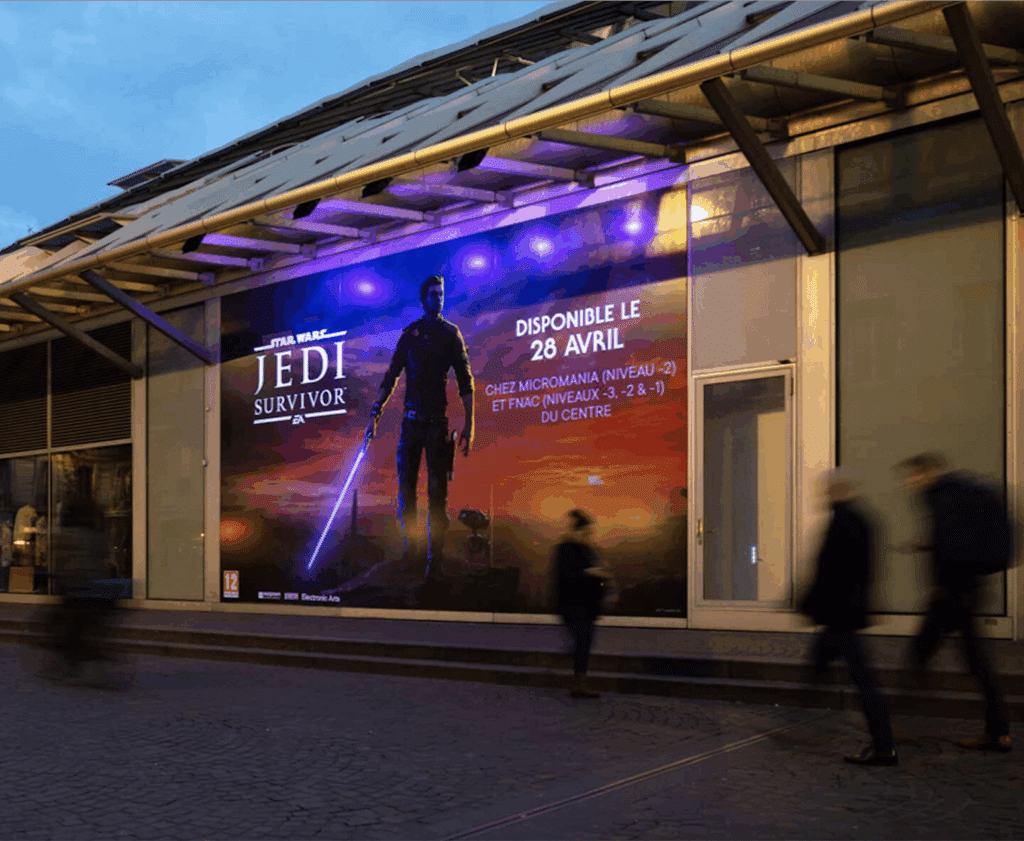
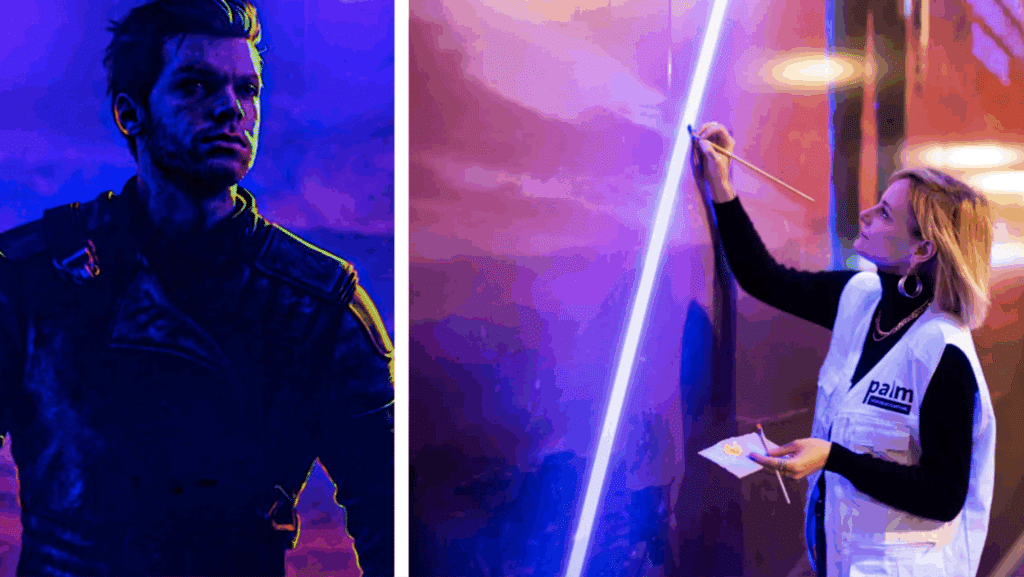
Some campaigns are good examples: Publicis Media and PALM teamed up for the launch of a Star Wars video game (EA GAMES), with a murals using a phosphorescent technique to depict a lightsaber, perfectly suited to the world of the saga. In the dark, the paint captured and reflected light to reproduce the glow of the lightsaber's rays, giving the impression that it was cutting through the urban night. Created at eye level, the murals passersby to immerse themselves fully in the scene and take photos with the main character. The textures and material effects added volume and perspective, transforming the wall into a visual and almost cinematic experience. One experience by day and another by night! This combination of craftsmanship and galactic imagination made the street a natural extension of the Star Wars universe.
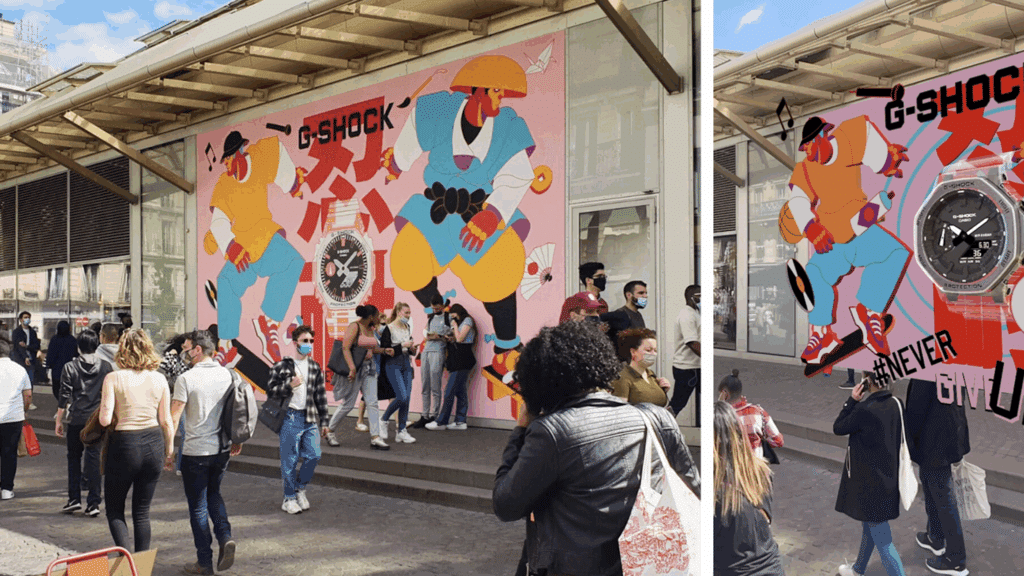
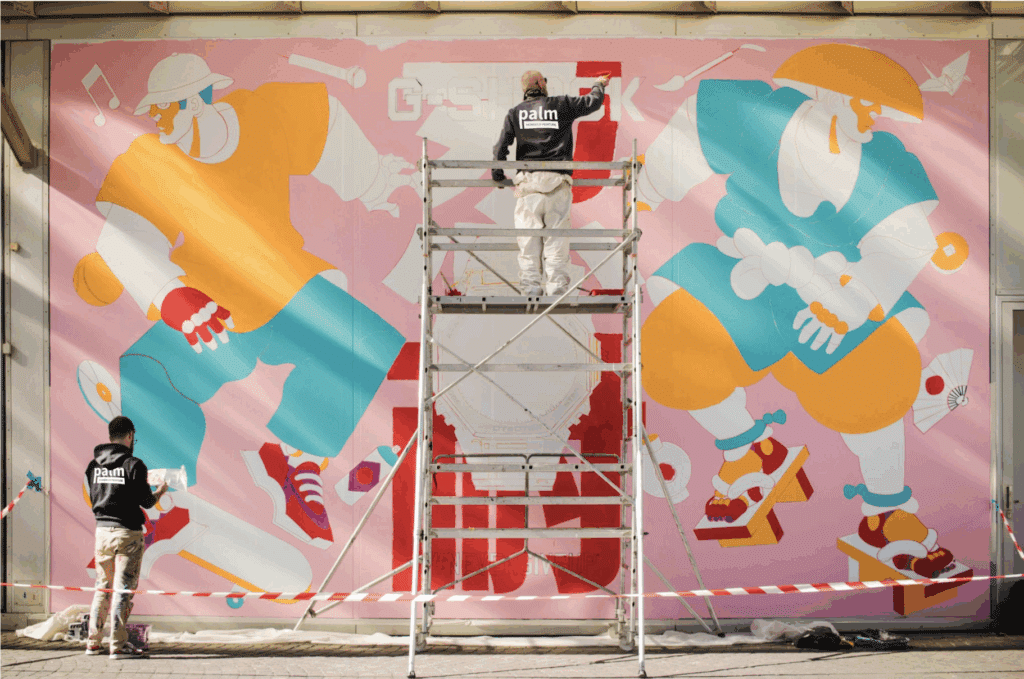
For G-Shock, a project by Green Garden Digital and PALM, the murals even further by combining traditional painting, art, and augmented reality. Designed in collaboration with local artist Ruben Gérard, who created the murals visual murals, the work was a fully-fledged artisanal creation, visible from the street.
It was transformed into an interactive experience as soon as passersby filmed it with their smartphones: the painted elements came to life on the screen, creating dynamic animations that made the experience immersive. This approach shows how a murals can interact with new technologies and adapt to the habits of consumers, who are increasingly connected and in search of uniqueness. The wall then becomes a bridge between the tangible and the digital, between the authentic emotion of the pictorial gesture and the modernity of mobile interaction.
Urban space is gradually transforming into a hybrid playground, where advertising is no longer content to simply display: it creates a unique, memorable, and engaging experience. It is in this logic that urban sponsorship is gradually taking shape.
From hand-painted advertising urban sponsorship
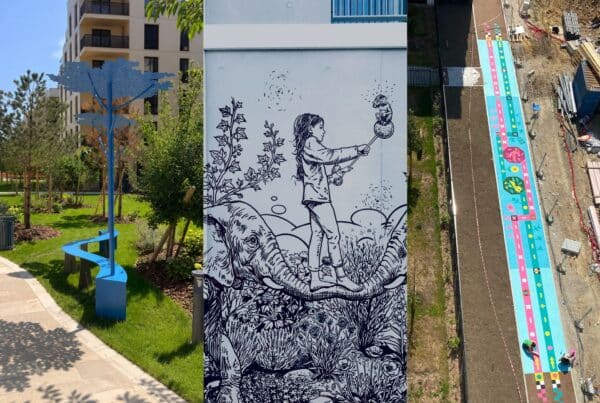
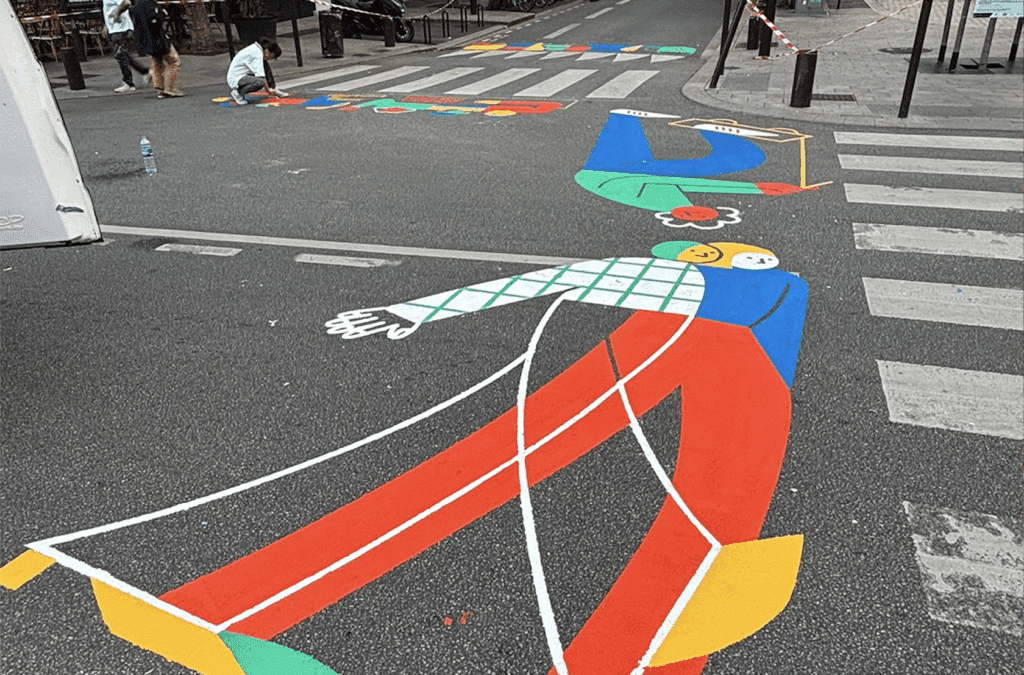
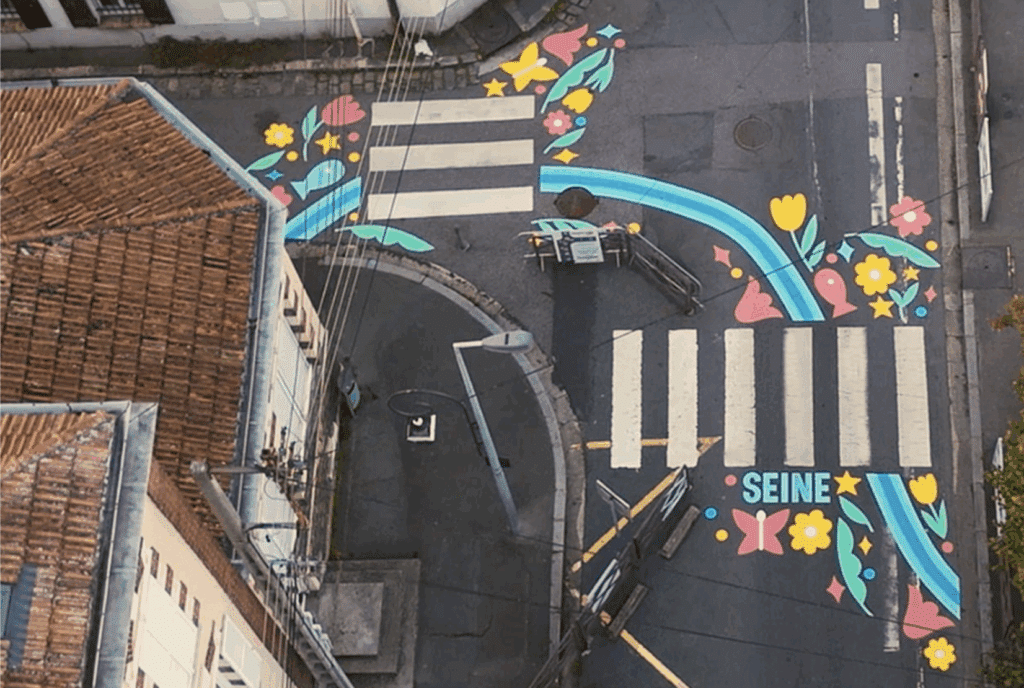
The hand-painted advertising tomorrow is no longer content to adorn walls or catch the eye. It is becoming an act of urban patronage, reviving the spirit of the Renaissance, when the Medici commissioned frescoes that were both works of art and markers of power and prestige. Today, brands that engage in this approach are no longer seeking simply to be seen, but to leave a lasting cultural and social imprint by creating links between art, the advertiser, and the community. Rather than multiplying giant logos, they invest in media that make sense for the city and its inhabitants: school facades, crosswalks, playgrounds, bike paths, and street furniture. Each intervention becomes a cultural gift that improves everyday life and leaves a mark beyond the advertising message.
The partnership between PALM and the Renault Group and its art foundation illustrates this vision. In several communities linked to the brand's history, PALM has collaborated with local artists to transform school surroundings and make pedestrian crossings and bike paths safer with colorful murals. These projects are not limited to aesthetics: they contribute to the safety of residents, the revitalization of the neighborhood, and the creation of local pride, while anchoring the brand in everyday life. For Renault, investing in these spaces has a special meaning: the brand, historically linked to roads and mobility, is promoting safety for everyone in a concrete and visible way. These initiatives go beyond advertising by creating a strong bond with residents and reaching all generations: children, parents, and grandparents share the same beautified and safe urban space, which now tells a common story. The brand's presence remains discreet and elegant: it is displayed in a dotted line format using signs, similar to those found in museums, placed along the route, allowing the initiative to be understood without saturating the public space.
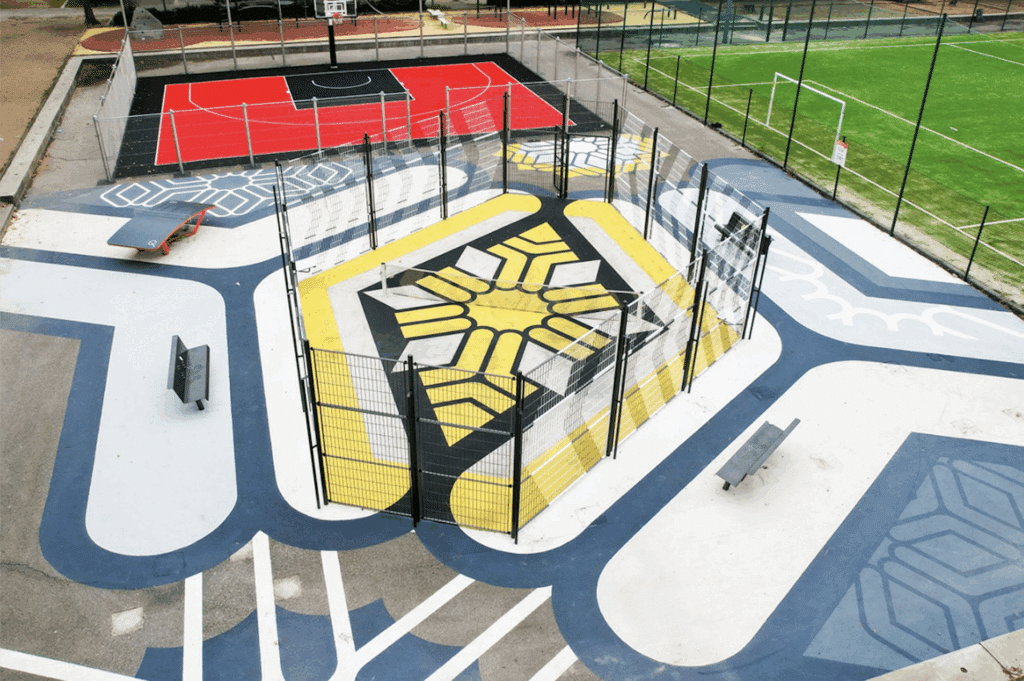
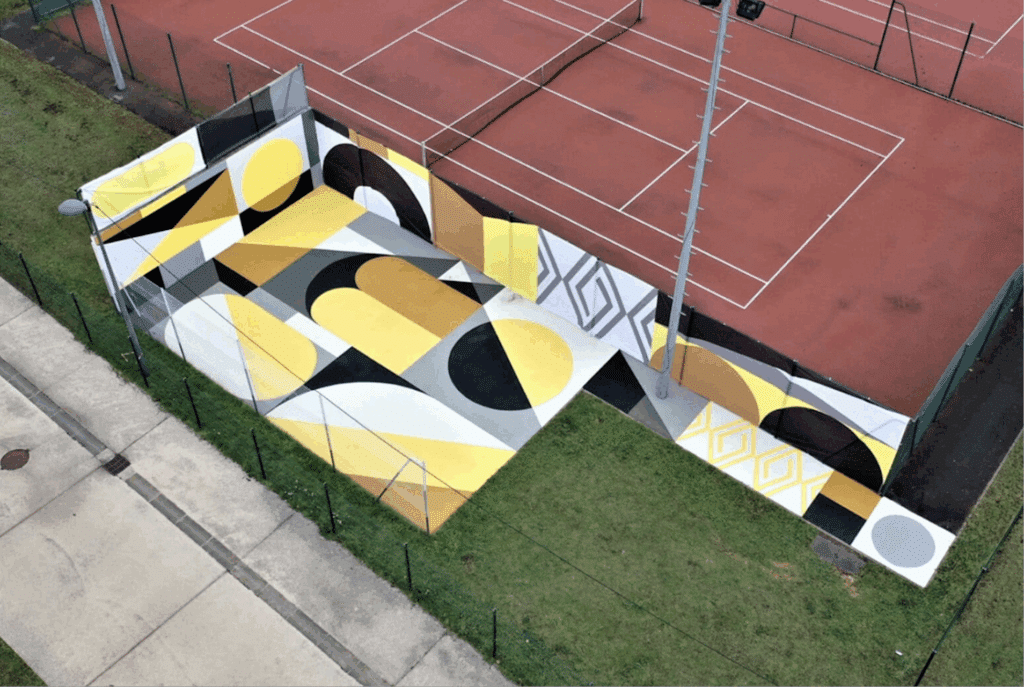
The idea for a brand is to have several strings to its bow. Renault's commitment is also expressed in the sporting and cultural fields. Its partnership with Roland-Garros comes to life through the renovation, construction, and artistic painting of tennis courts, in collaboration with PALM and local artists. Each design is intended to democratize the sport and make the venues attractive, while echoing the brand's history in the cities where it has established itself and developed, such as Grigny and Lyon. Renault is interested in tennis because the sport embodies strong values that resonate with its image: precision, performance, elegance, and competitive spirit. It is also an intergenerational sport, followed by a wide and family-oriented audience, which allows it to forge a lasting emotional bond with residents of all ages. Renault is not content to be a mere figurehead sponsor. The brand takes concrete action on the ground, linking these projects to its sports ambassadors, the players it supports such as Diede de Groot, and social initiatives such as Fête le Mur, the association founded by Yannick Noah, which promotes access to tennis for young people in disadvantaged neighborhoods. Each project thus becomes a bridge between the brand, art, sport, and the community, an example of contemporary patronage where advertising is transformed into tangible cultural and social engagement.
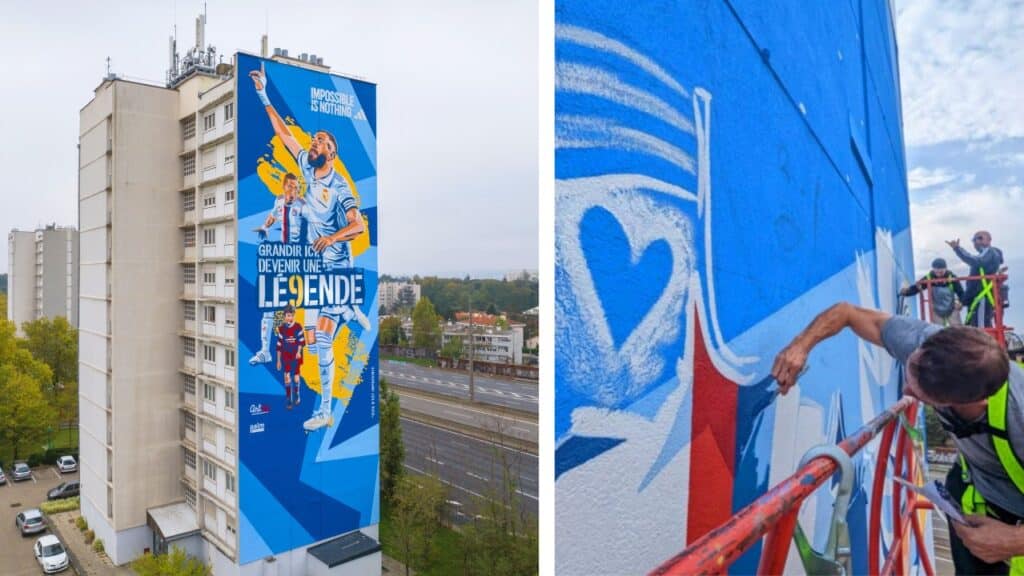
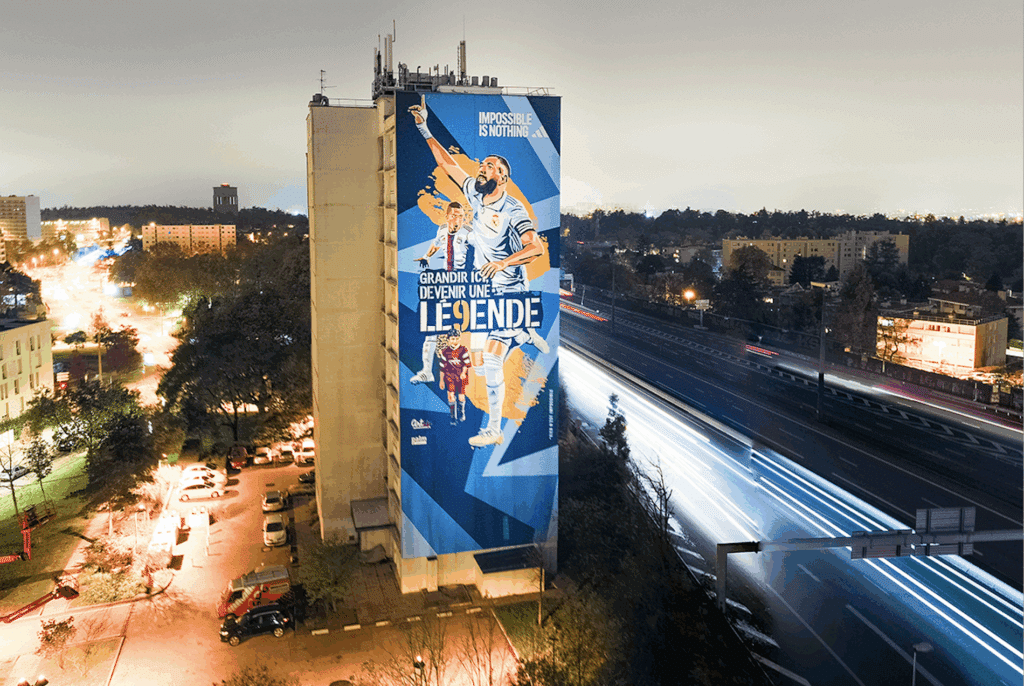
Another striking example is the murals to celebrate Karim Benzema's Ballon d'Or award in Bron, the neighborhood where he grew up, funded by Adidas. Far from being a simple advertisement, this project has become a symbolic act, connecting the athlete, the brand, and the local community. PALM carefully selected the most relevant locations in the heart of the neighborhood, in collaboration with Lyon Métropole Habitat, the department's main landlord. To bring this extraordinary project to life, PALM supported two local artists in reproducing their design. Transforming a design printed on an A4 sheet into a murals m² murals perched on two platforms 40 meters high requires considerable technical expertise. Every line and every shade of color had to be rethought on a monumental scale in order to preserve the power of the original design while creating an immersive and vibrant work in the urban space. For such a project to see the light of day, it was necessary to obtain the approval of the local authority and a specific advertising permit, as it was an extraordinary project. This is precisely where the success of such an initiative lies: in a France that is increasingly reluctant to accept advertising, a human, cultural, and value-driven approach can still find its place and receive the support of local authorities. The murals part of a comprehensive revitalization program, helping to improve the image of the neighborhood and attract visitors. It has restored pride among residents and has become a catalyst for concrete projects: renovating playgrounds, providing equipment, and organizing free activities to encourage soccer and local life.

This approach embodies the hand-painted advertising tomorrow: fewer messages, but more meaning. Each project becomes an encounter between art and society, an act of modern patronage where the advertiser does not simply display their brand, but supports a cultural, social, or sporting project that enriches the city. murals longer an end in themselves, but a catalyst for stories, encounters, and concrete actions, capable of transforming the perception of the brand and strengthening its connection with residents. The circle is thus complete: as in the Renaissance, public art becomes a language between sponsors, artists, and the city, but in a contemporary spirit, rooted in the life of neighborhoods and residents.
See also